Klairia Blog
The State of GEO Today: What We Know, What Works, and What Is Still Emerging
A practical summary of Generative Engine Optimization today: the reliable foundations, the tactics with early evidence, and the clues brands should track next.

Generative Engine Optimization, or GEO, is still young. The rules are not as stable as classic SEO, the ranking systems are less visible, and every major AI platform retrieves, summarizes, and cites information differently.
But GEO is not a mystery anymore.
We already know enough to say that visibility in AI answers is not random. Brands that are clearly described, consistently mentioned, technically accessible, and supported by trustworthy third-party sources are easier for AI systems to understand and recommend.
What GEO means now
GEO is the practice of making your company, product, and expertise easier for generative AI systems to find, understand, trust, and cite.
This includes:
- AI search engines like Perplexity, ChatGPT Search, Gemini, and Microsoft Copilot.
- Answer engines that summarize web results into direct recommendations.
- AI assistants that compare tools, explain categories, and suggest vendors.
- Retrieval systems that use public web pages, documentation, reviews, and knowledge bases as context.
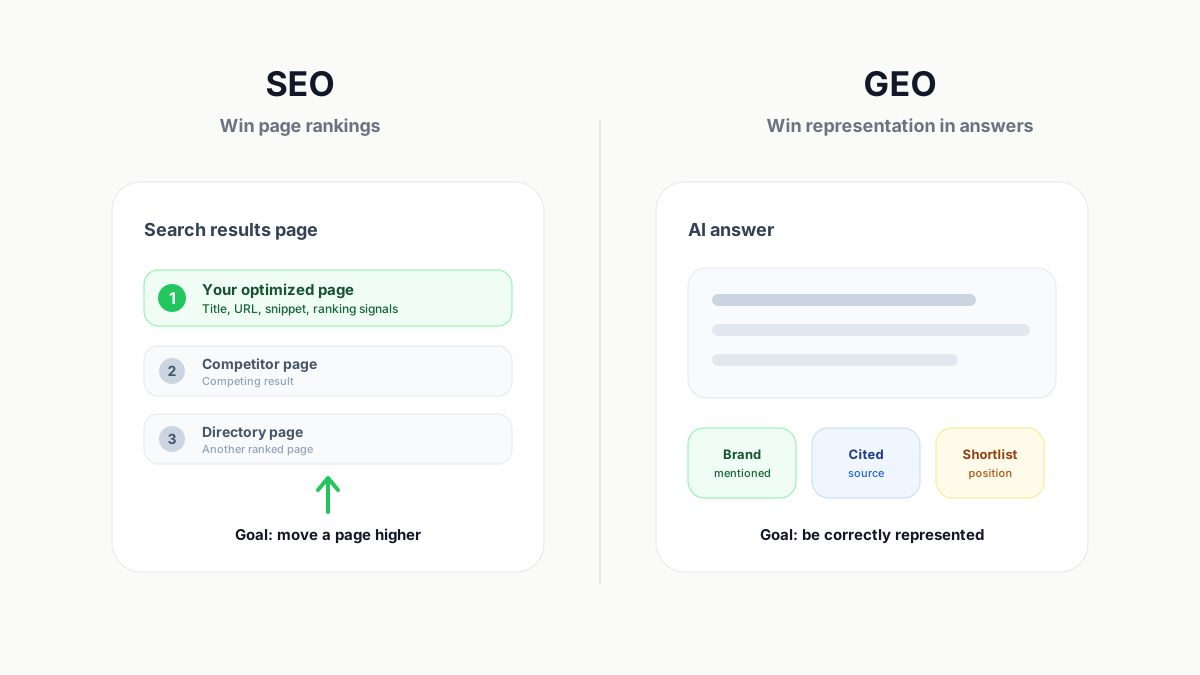
Traditional SEO focused on ranking a page for a query. GEO focuses on being represented correctly inside the answer.
That difference matters. In generative results, the user may never see ten blue links. They may only see a short answer, a product shortlist, or a recommendation with a few citations.
What we know works
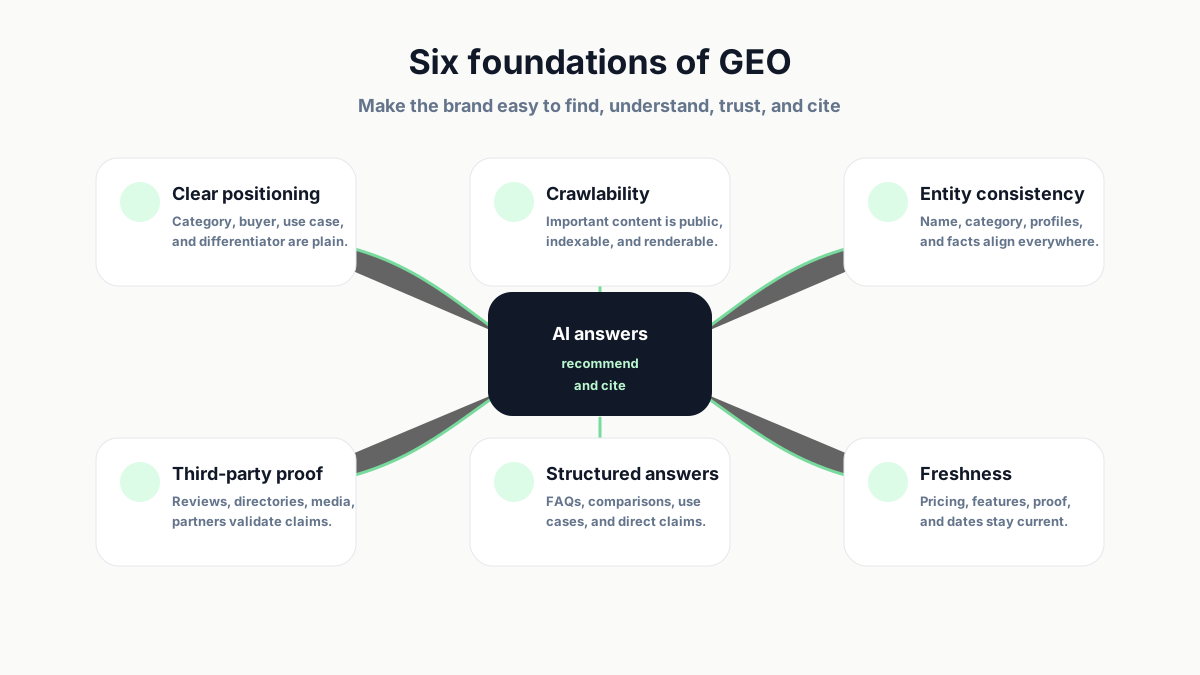
Some GEO foundations are already clear because they match how retrieval, language models, and citation systems behave.
1. Clear positioning beats vague messaging
AI systems need simple, repeated facts to understand what a company does.
If your homepage says you are “the future of intelligent growth,” but never clearly states your category, buyer, use case, and differentiator, humans may be confused and AI systems will be too.
What works:
- Describe the product plainly in the first screen of important pages.
- Use category language that people actually search for.
- Name the target user and core use cases.
- Repeat the same positioning across homepage, docs, pricing, comparison pages, and profiles.
The goal is not keyword stuffing. The goal is reducing ambiguity.
2. Crawlable, indexable content still matters
AI answer engines often depend on web retrieval, search indexes, or partner indexes. If your content cannot be crawled or rendered reliably, it is less likely to be used.
What works:
- Server-render important content instead of hiding it behind heavy client-side interactions.
- Keep public pages accessible without login walls.
- Use clean page titles, headings, and internal links.
- Maintain fast, stable pages with minimal rendering friction.
- Avoid burying key product facts inside images, animations, or scripts only.
GEO does not replace technical SEO. It builds on top of it.
3. Entity consistency is a real advantage
Generative systems reason about entities: companies, people, products, categories, competitors, features, and industries.
If your brand is described differently everywhere, the model has a weaker understanding of who you are.
What works:
- Use the same company name, product name, and category across the web.
- Keep social profiles, directories, review sites, and documentation aligned.
- Publish an About page that clearly explains the company.
- Make leadership, location, product scope, and market category easy to verify.
The more consistent the entity, the easier it is to retrieve and summarize accurately.
4. Third-party mentions carry weight
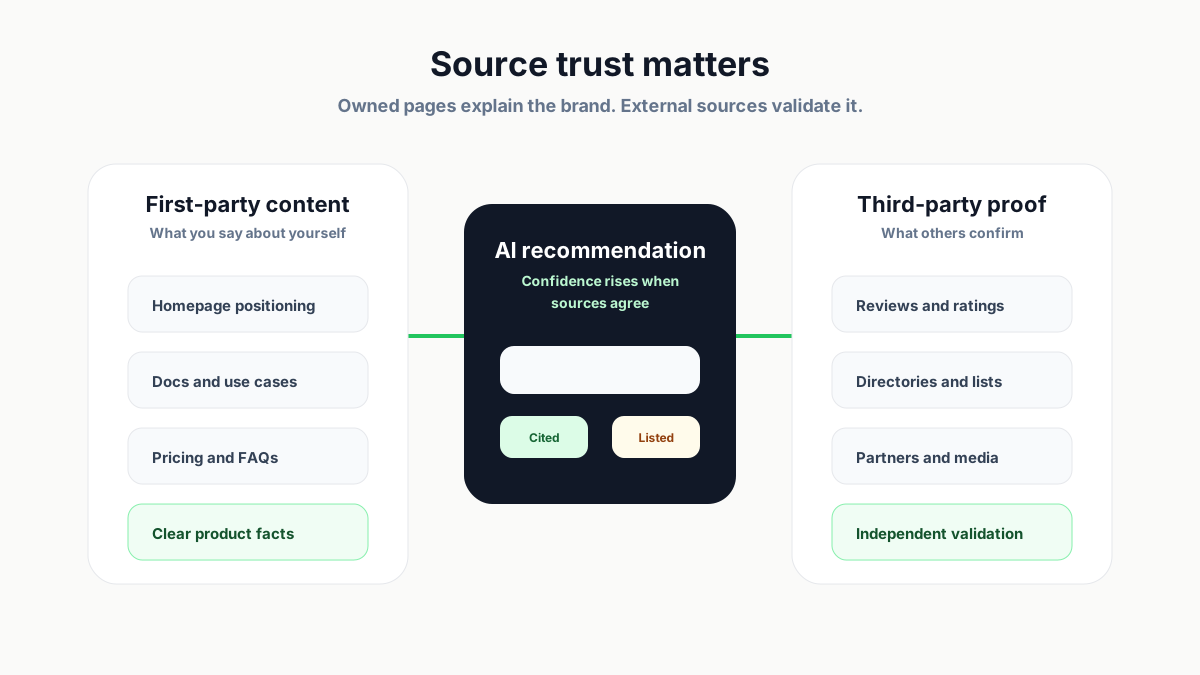
AI systems do not only look at what you say about yourself. They also use external sources to validate claims and build confidence.
This is one of the strongest parallels between SEO, PR, and GEO.
What works:
- Earn mentions in trusted publications.
- Get listed in relevant directories and marketplaces.
- Encourage detailed reviews on credible platforms.
- Appear in comparison articles, industry roundups, podcasts, and expert resources.
- Build partner pages and integration pages that mention both entities clearly.
Self-published content helps explain you. Third-party content helps validate you.
5. Direct answers and structured explanations help
Generative systems are good at extracting concise explanations from well-structured pages.
Pages that answer specific questions clearly are more likely to be useful as retrieval context than pages that only speak in broad marketing language.
What works:
- Write concise definitions for your category and features.
- Add FAQ sections that answer real buyer questions.
- Create comparison pages that explain tradeoffs honestly.
- Document use cases, limitations, pricing logic, and integrations.
- Use headings that match natural questions.
If a page helps a human make a decision, it often helps an AI system summarize that decision too.
6. Freshness matters in fast-moving categories
AI systems and retrieval layers favor information that looks current, especially for software, pricing, regulation, and competitive categories.
Outdated pages create risk. They may still be retrieved, but they can lead to wrong summaries.
What works:
- Keep pricing, feature, and integration pages up to date.
- Refresh comparison pages when competitors change.
- Add publication and update dates where relevant.
- Remove obsolete claims.
- Publish regularly around category changes.
Freshness is not only a ranking signal. It is also a trust signal.
The clues we have, but cannot fully prove yet
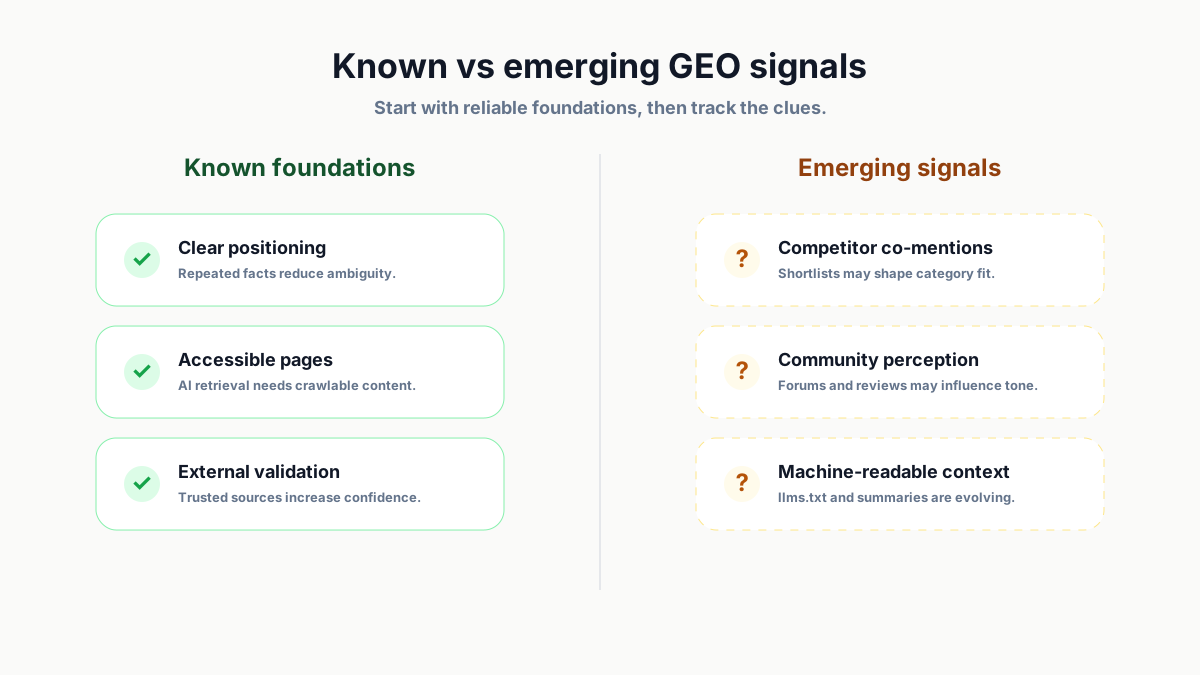
GEO is still developing, so some patterns are promising but not fully settled. These are clues worth tracking.
1. Being mentioned alongside competitors may help
AI systems often answer commercial queries by creating shortlists. For example: “best tools for X,” “alternatives to Y,” or “which platform should I use for Z?”
If your brand rarely appears in the same context as category leaders, it may be harder for models to place you inside the right consideration set.
Practical clue:
- Create honest alternative and comparison content.
- Get included in third-party category roundups.
- Build pages for integrations, use cases, and industries where competitors are also discussed.
2. Specificity may beat volume
Classic content marketing often rewarded publishing many broad articles. GEO appears to reward pages that contain precise, extractable information.
A short page with exact product details, buyer fit, limitations, and examples may be more useful than a long generic article.
Practical clue:
- Write pages that answer one decision-making question very well.
- Include concrete examples, supported claims, and named use cases.
- Avoid filler content that says little in many words.
3. Citations depend on source fit, not just authority
A highly authoritative domain is useful, but AI answer engines also need pages that directly support the answer being generated.
For niche queries, a focused page from a smaller site may be cited if it explains the topic better than a broad authority page.
Practical clue:
- Create pages that are citation-ready.
- Use clear claims that can stand alone.
- Make important facts easy to quote or summarize.
4. Community and user-generated content may influence perception
AI systems can surface information from forums, social platforms, reviews, GitHub, Reddit, and support communities when those sources are accessible.
This means brand perception is not limited to your website.
Practical clue:
- Monitor public discussions about your brand.
- Answer questions in communities where your buyers research tools.
- Encourage users to describe real outcomes, not just leave star ratings.
5. Machine-readable context may become more important
Files like llms.txt, structured data, clean documentation, and API references are all attempts to make content easier for AI systems to consume.
The ecosystem is not fully standardized yet, but the direction is clear: companies will increasingly publish AI-friendly context alongside human-facing pages.
Practical clue:
- Maintain accurate structured data where it fits.
- Keep documentation clean and crawlable.
- Experiment with AI-readable summaries of your product, use cases, and policies.
A practical GEO checklist for teams
If you want to improve GEO today, start with the basics before chasing tricks.
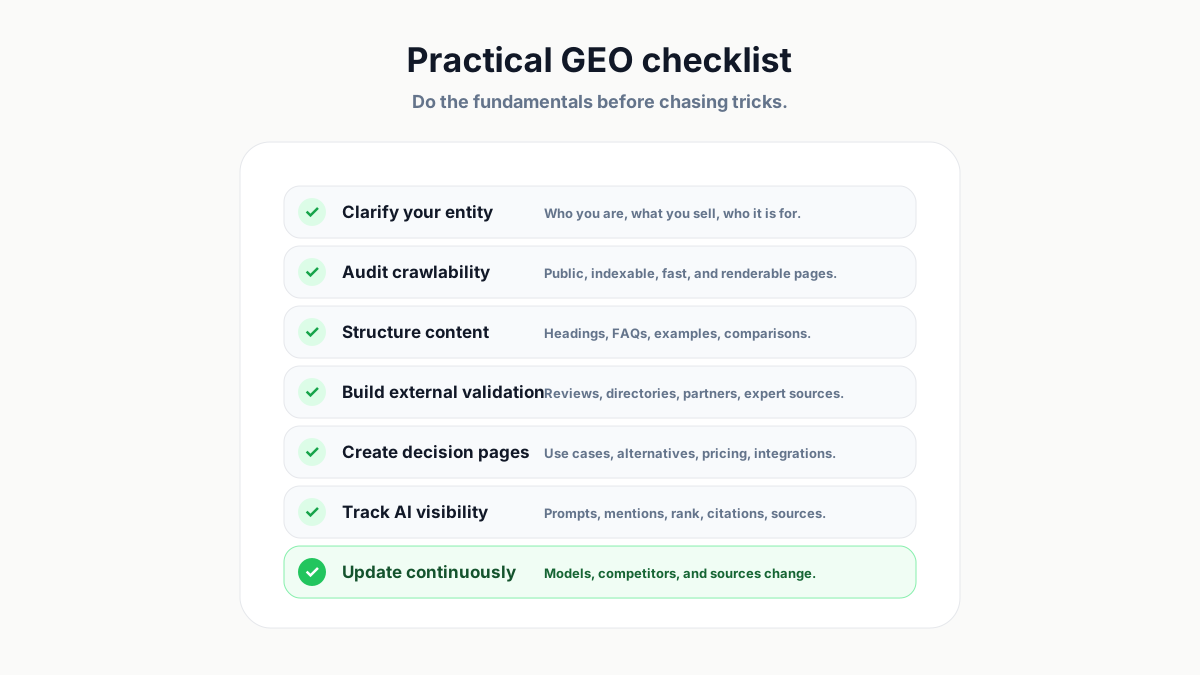
- Clarify your entity: Make it obvious who you are, what you sell, who it is for, and which category you belong to.
- Audit crawlability: Confirm that important pages are public, indexable, fast, and easy to render.
- Strengthen content structure: Use direct headings, concise answers, FAQs, comparison sections, and examples.
- Build external validation: Earn mentions, reviews, integrations, directory listings, and expert references.
- Create decision pages: Publish use case, alternative, comparison, pricing, and integration content.
- Track AI visibility: Test prompts across AI engines and monitor whether your brand appears, how it is described, and which sources are cited.
- Update continuously: GEO is not a one-time setup. The web, models, and competitors change.
What not to do
Because GEO is new, many teams will be tempted by shortcuts. Most are risky or ineffective.
Avoid:
- Keyword stuffing for AI.
- Creating fake reviews or synthetic third-party mentions.
- Publishing large volumes of generic AI-written content.
- Blocking crawlers without understanding the tradeoff.
- Making unsupported claims that external sources cannot validate.
- Optimizing only for one AI platform.
The best GEO strategy is not manipulation. It is becoming easier to understand, easier to verify, and easier to recommend.
Putting it together
GEO today is practical, not magical.
What works for sure is a strong foundation:
- Clear positioning.
- Accessible content.
- Consistent entity signals.
- Structured explanations.
- Third-party validation.
- Fresh and accurate pages.
What we are still learning is how each AI platform weighs sources, how citations are selected, how personalization changes recommendations, and how new standards for AI-readable content will evolve.
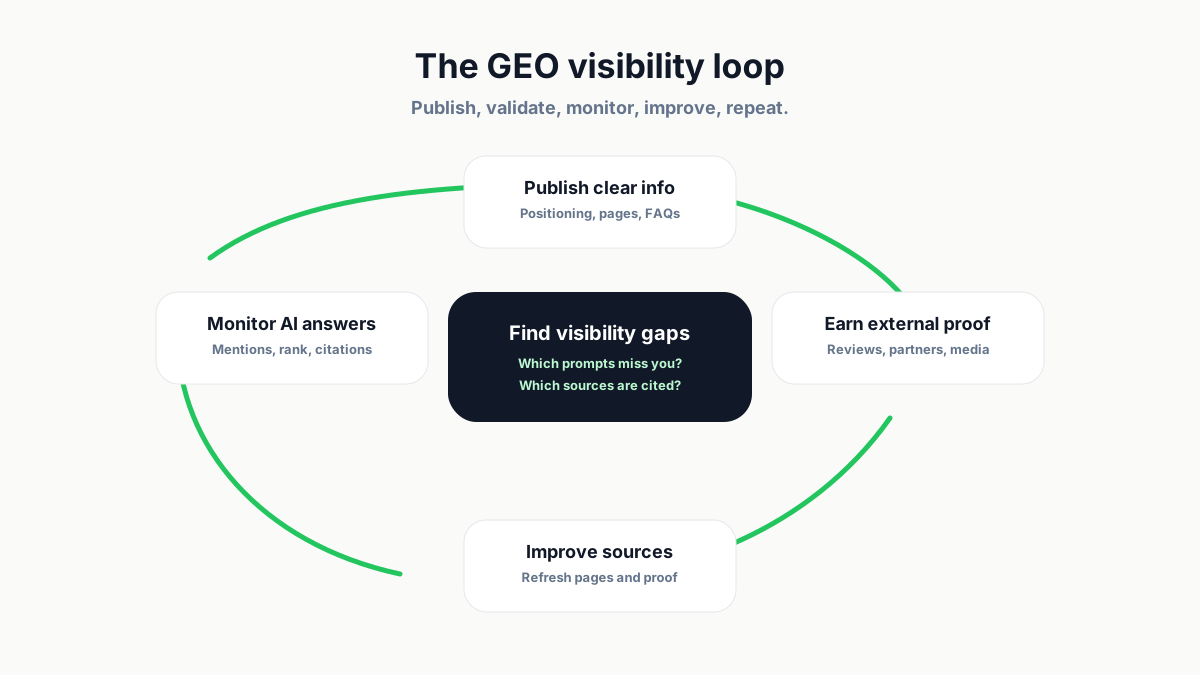
For now, the best teams are treating GEO as an ongoing visibility loop: publish clear information, earn external proof, monitor how AI systems describe the brand, and improve the sources those systems rely on.
That is the clue: GEO is not only about optimizing for models. It is about making the truth about your product easier to find, trust, and repeat.
The part most teams skip is the feedback loop — actually seeing how AI engines describe you, where you appear, and which sources they cite. That is what we built Klairia to do: track your brand’s visibility across LLMs so you can tell whether the work above is landing, and where to improve next.